Description
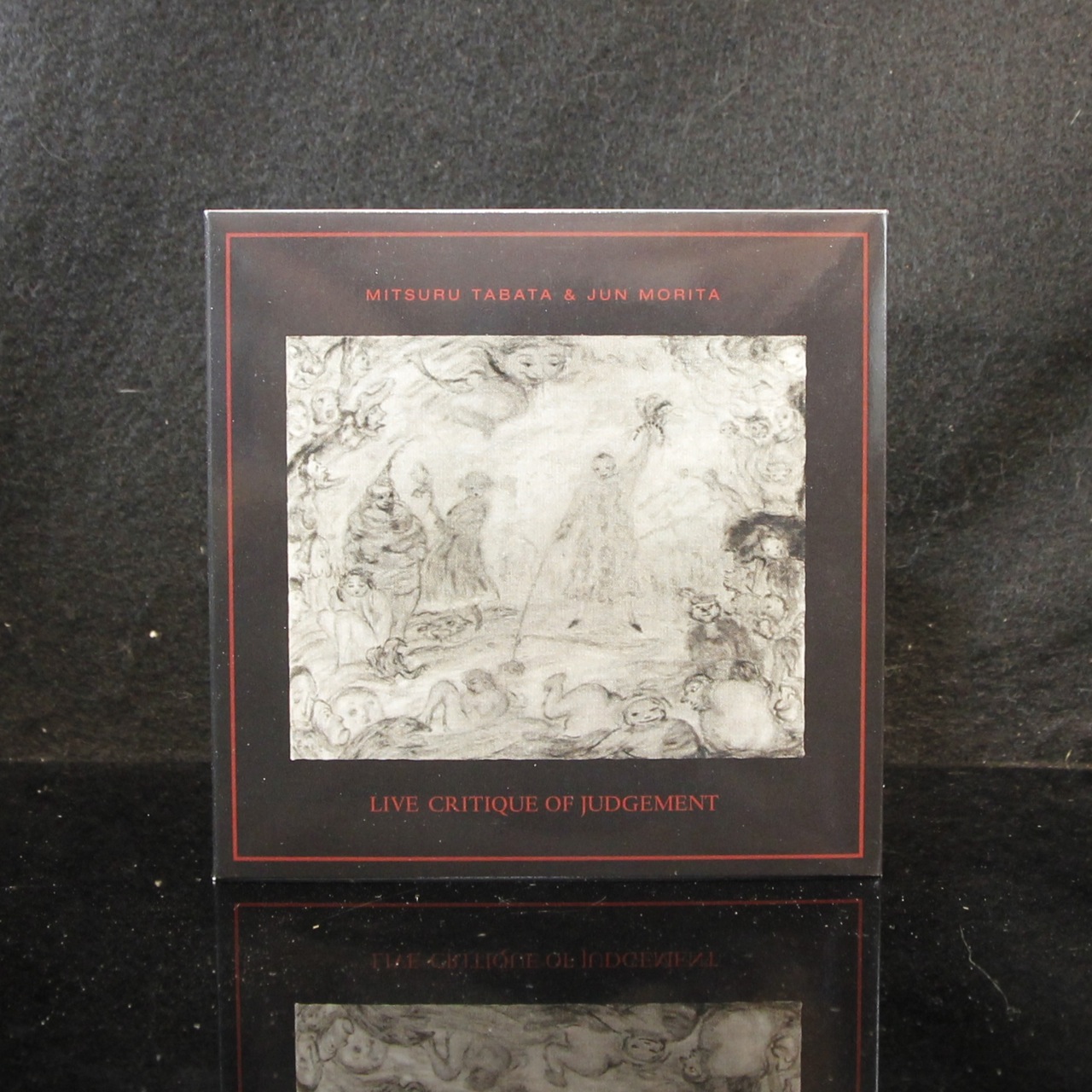
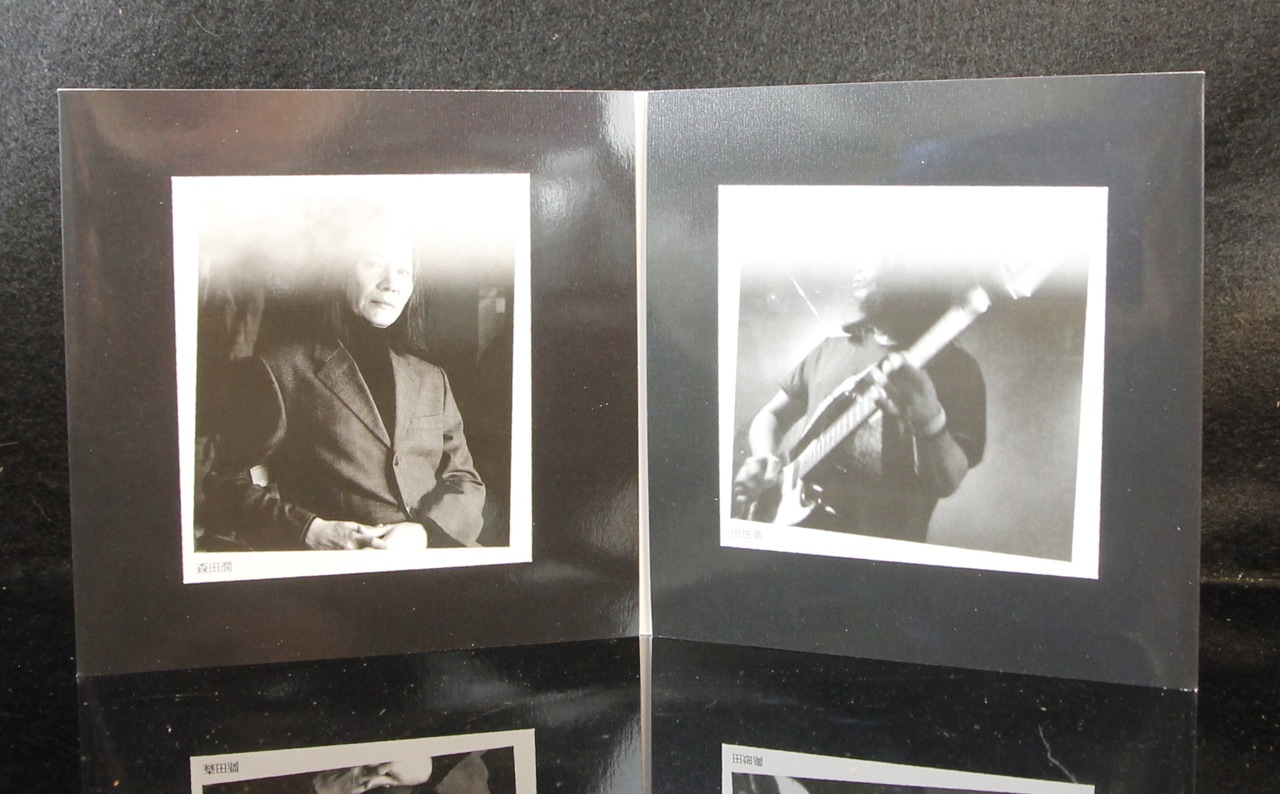
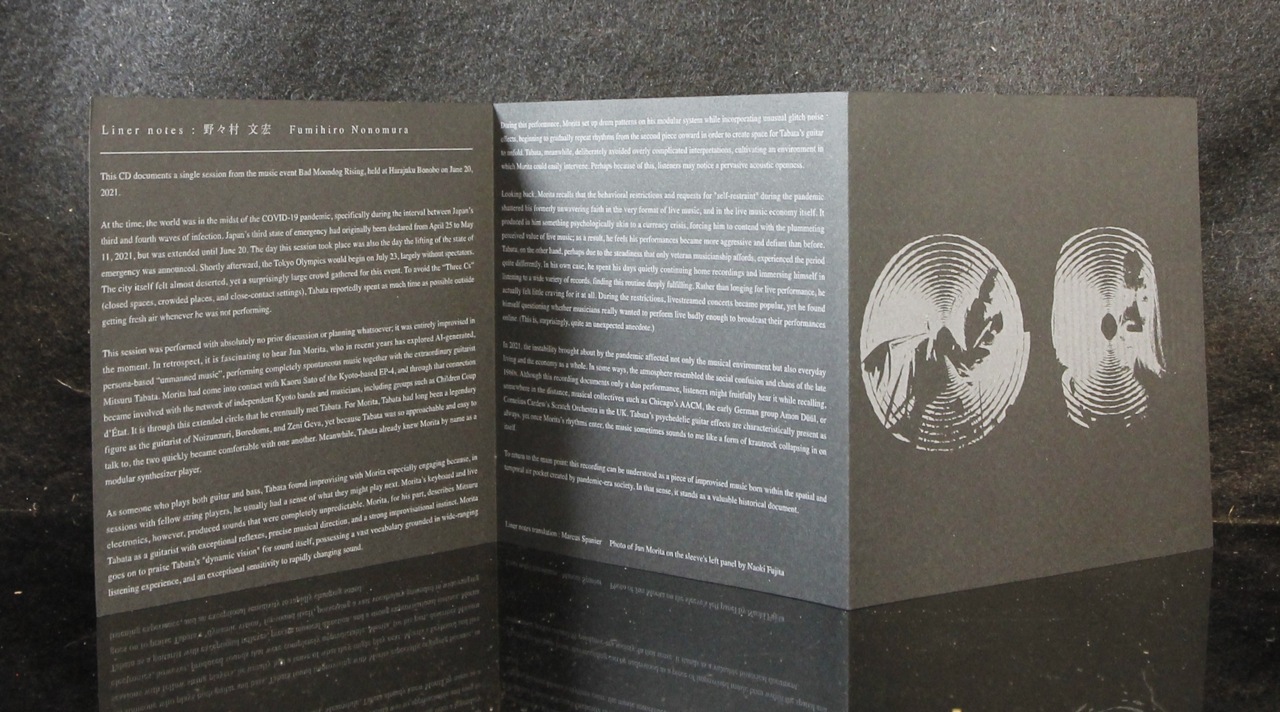
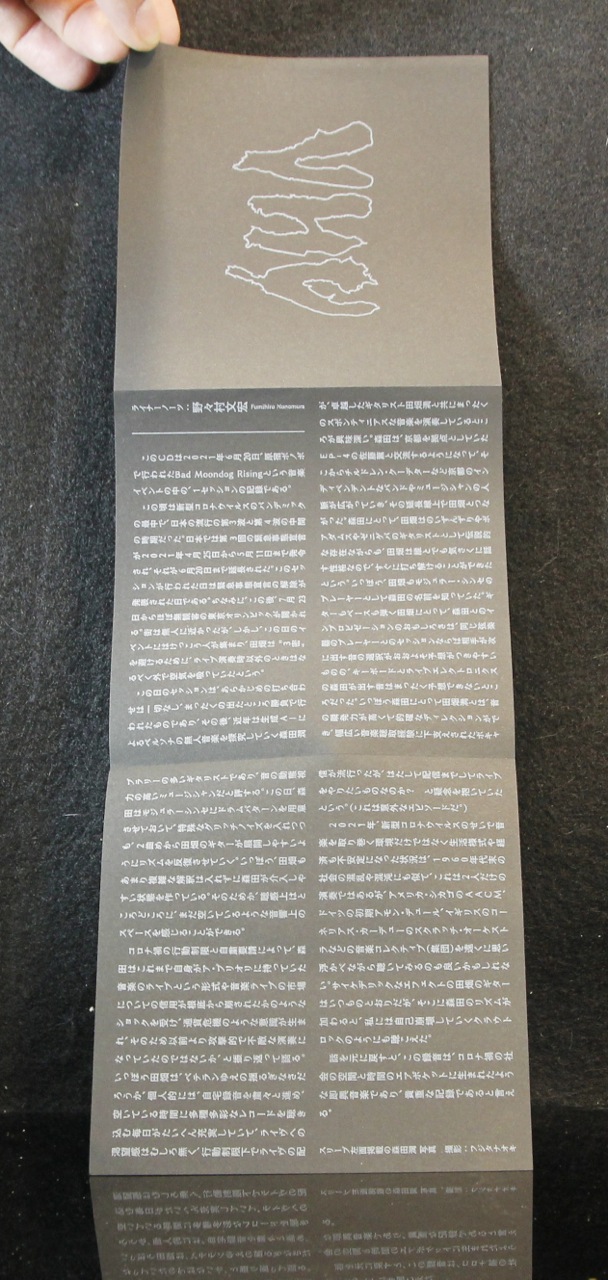
Packaged in a gatefold digisleeve with an obi strip and risograph-printed insert.
Manufactured in Japan
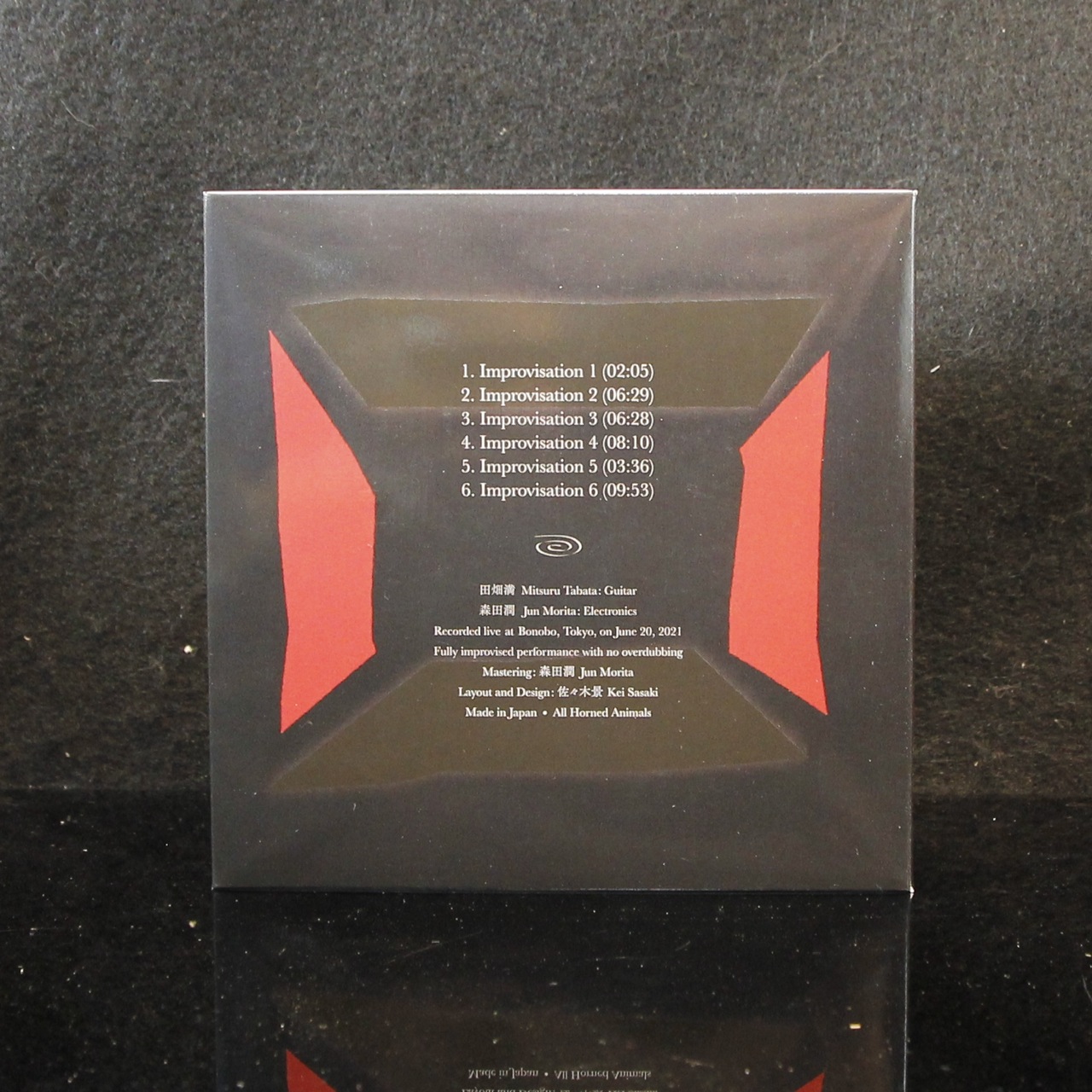
Guitar : ⽥畑満 Mitsuru Tabata
Electronics, Mastering : 森⽥潤 Jun Morita
Recorded live at Bonobo, Tokyo, on June 20, 2021
Fully improvised performance with no overdubbing
Preview: https://www.youtube.com/watch?v=5z5bZPWOCM8
Layout and Design: 佐々⽊景 Kei Sasaki
Liner notes : 野々村 ⽂宏 Fumihiro Nonomura
Liner notes translation : Marcus Spanier
The following comments are extracted from the liner notes:
This session was performed with absolutely no prior discussion or planning whatsoever; it was
entirely improvised in the moment.
As someone who plays both guitar and bass, Tabata found improvising with Morita especially
engaging because, in sessions with fellow string players, he usually had a sense of what they
might play next. Morita’s keyboard and live electronics, however, produced sounds that were
completely unpredictable. Morita, for his part, describes Mitsuru Tabata as a guitarist with
exceptional reflexes, precise musical direction, and a strong improvisational instinct. Morita
goes on to praise Tabata’s “dynamic vision” for sound itself, possessing a vast vocabulary
grounded in wide-ranging listening experience, and an exceptional sensitivity to rapidly
changing sound.
During this performance, Morita set up drum patterns on his modular system while
incorporating unusual glitch noise effects, beginning to gradually repeat rhythms from the
second piece onward in order to create space for Tabata’s guitar to unfold. Tabata, meanwhile,
deliberately avoided overly complicated interpretations, cultivating an environment in which
Morita could easily intervene. Perhaps because of this, listeners may notice a pervasive acoustic
openness.
In 2021, the instability brought about by the pandemic affected not only the musical
environment but also everyday living and the economy as a whole. In some ways, the
atmosphere resembled the social confusion and chaos of the late 1960s. Although this recording
documents only a duo performance, listeners might fruitfully hear it while recalling, somewhere
in the distance, musical collectives such as Chicago’s AACM, the early German group Amon
Düül, or Cornelius Cardew’s Scratch Orchestra in the UK. Tabata’s psychedelic guitar effects
are characteristically present as always, yet once Morita’s rhythms enter, the music sometimes
sounds to me like a form of krautrock collapsing in on itself. (…)
This recording can be understood as a piece of improvised music born within the spatial and
temporal air pocket created by pandemic-era society. In that sense, it stands as a valuable
historical document.